



Trace how education and universities became the industry it is: its origins, stalwarts, catastrophes and triumphs.
Industry Essentials 5.0
Certificate in Industry Essentials 5.0 — Education and Universities
IEEDTM · Education & Universities
Build the education and universities capability that the sector depends on: planning, sourcing, supplier performance and resilience. Evidence it with a certificate of completion.
Procurement & Supply Chain
Education & Universities
20 Modules
Self paced study
60 Hours
Guided learning time
Free Course
Verifiable digital credential
About the IEEDTM Certification
To give a professional working in or entering education & universities a grounded understanding of Industry 5.0, of how this sector operates, and of why supply chain and procurement capability determines whether the sector's transformation succeeds.
Who can join?
Skills You’ll Build
Explain how the sector actually operates: where the money flows, who the players are, and what the rulebook demands.
Describe Industry 5.0, human-centricity, resilience and sustainability, and where it has genuinely landed in this sector.
Recognize why supply chain and procurement capability decides whether the sector's transformation succeeds.
Assess your own organization against the three Industry 5.0 values and its sector risk profile.
See where the SCPMI professional community, its case studies and research close the sector-depth gap.
Core topics
- Education and Universities Fundamentals and Terminology
- Planning and Demand Management in the Education and Universities Sector
- Sourcing, Supplier Selection and Contract Basics
- Supplier Performance, Risk and Continuity
- Cost, Value and Commercial Decision-Making
- Data, Digital Tools and Professional Judgment
Who this certification is for
IEED is for procurement and supply chain professionals working in or moving into the education and universities sector, from those early in their career who want structured grounding, to experienced practitioners who want their existing expertise measured against a published standard.
No prior SCPMI credential is required. Employers use it to give a team one shared vocabulary for education and universities.
Procurement & Sourcing
Demonstrate practical knowledge
Supply Chain & planning
Demonstrate practical knowledge
Supplier Management
Demonstrate practical knowledge
Pharrmaceutical Operations
Demonstrate practical knowledge
Quality & Regulatory
Demonstrate practical knowledge
Health Care Procurement
Demonstrate practical knowledge
IEEDTM Curriculum
20 Modules60 guided hours
- The Guild That Called Itself a University
- Al Qarawiyyin and the Older Claim
- What Had to Exist First
- The Problem the University Was Built to Solve
- Decisions Taken Before Anyone Alive
- The First Supply Chain Was Parchment and Patronage
- Humboldt Fuses Teaching and Research
- Montessori Rebuilds the Classroom from the Child
- The Open University Decouples Learning from Place
- What Each One Actually Changed
- The Price They Paid
- Every Reform Needed a Way to Reach People
- 2012: The Year the University Was Declared Over
- The Completion Rate Nobody Advertised
- Access Is Not the Same as Learning
- Reading the Rulebook Backward
- Why Rules That Look Arbitrary Are Not
- What the Platform Boom Taught Procurement
- From Privilege to Expectation
- The GI Bill and the Robbins Report
- The Machinery Behind Mass Enrollment
- Why It Is Harder Than It Looks
- The Limits of What an Industry Can Decide
- Building the Campuses to Hold Them
- The International Student Boom
- Demographic Decline Arrives
- What Does a Degree Now Signal?
- Endowments in Centuries, Timetables in Fifteen Minutes
- Frontier Research Bought Like Stationery
- Every Absurdity Is a Fossil of a Purchase
- Three Ways a University Earns
- Public Funding or Tuition Driven
- The Cost Base of a Typical Institution
- Fixed Against Variable
- Where the Margin Actually Sits
- What Gets Bought In Rather Than Made
- The Chain from Lecture to Graduation
- Research Administration Behind the Scenes
- The Estate and the Facilities
- Student Services and Digital Learning
- Where the Handoffs Jam
- The Make or Buy Line Has Moved
- Everyone in the Room
- What a University Actually Buys
- Platforms, Content and the Digital Shelf
- Laboratory and Estates Supply
- Concentrated or Fragmented?
- How Easily a Supplier Can Be Replaced
- How Deals Are Actually Structured
- Frameworks, Call-Offs and Consortium Buying
- Multi-Year Licensing and Grant Conditions
- The Standards the Sector Runs On
- When the Data Formats Do Not Agree
- Cyber Exposure Is Now Supply Risk
- Public Procurement Law on Campus
- Grant Conditions and Their Fine Print
- Safeguarding, Accessibility and Data Protection
- Who Inspects and Who Certifies
- The Fine and the Criminal File
- Where Buying Meets the Law
- Who Works in a University
- Career Paths and the Bodies Behind Them
- Qualifications That Carry Weight
- The Ethical Pressure Points
- What AI Should and Should Not Do in Teaching
- The Buyers Who Keep the Labs Running
- The European Commission's Three Values
- What Industry 4.0 Left Out
- Human Centricity on Campus
- Resilience and Sustainability, Unevenly Landed
- The Value Education Was Trained to Neglect
- Why Procurement Carries the Three Values
- Working Together, Not in Succession
- What the Machines Carry
- What People Carry
- A Boundary That Is Designed, Not Discovered
- Academic Autonomy Sets the Line
- Buying the Tools That Draw the Line
- Admissions and Retention Analytics
- Adaptive Learning Platforms
- Administrative Automation
- Deployed Capability Versus Vendor Projection
- When Systems Act Without a Human in the Loop
- Research Computing and the Contracts Behind It
- Campus Energy and the Retrofit Bill
- The Laboratory Energy Problem
- Sustainable Catering and Its Limits
- Regulated, Demanded, or Still Voluntary
- Scope 3 and the Procurement Lever
- How Fast the Voluntary Column Empties
- Continuity Through Disruption
- When the Estate, the Platform or the Funding Fails
- Efficiency Against the Capacity to Absorb a Shock
- Who Is Entitled to Make the Call?
- Usually Nobody, Until It Is Too Late
- Resilience Is Built in the Supply Base
- Buying Under Public Procurement Rules
- Specification Quality Decides Everything
- Following One Sourcing Decision
- Its Effect on Cost, Risk and Compliance
- How Few People Were in the Room
- The Customer at the End of the Decision
- Long Lead Times and Specialist Handling
- Why Generic Purchasing Cannot Manage It
- Following One Flow Decision
- Service, Working Capital and Continuity
- Where Reputation Is Made and Lost
- In Education, the Chain Is the Business
- The Gap the Sector Now Faces
- Procurement Law, Grant Conditions and Research Sourcing Together
- What the Job Requires That It Did Not Five Years Ago
- Why Sector Depth Beats General Competence
- Judgment a Business Will Trust
- The Knowledge That Walks Out the Door
- A Self-Assessment Against the Three Values
- Your Sector Risk Profile
- Grant Compliance, Lock-In and Lead Times
- The Estates Deferred Maintenance Question
- Where Your Automation Boundary Sits
- A Readiness View to Take Back to Your Function
20 modules, 60 guided hours, 60 case studies, mastering the journey from campus procurement to classroom through supply chain, sourcing, and procurement.

Who can join?
Built for Real Education and Universities Work
Case Based Learning
Real education and universities cases, each with its published source, so you see how the decision actually went.
Knowledge Checks
180 checks across the course, asking about the case you just read rather than the definition.
Story Led Decisions
60 decision points where you make the call first, then see what the organisation really did.
Glossary Flashcards
A flashcard set for every module, built from the 168 terms this course defines.
Choose how you Learn
Self Paced Online
Role focusedlearning
Instructor led Training
Learn at yourown pace
Corporate Training
Verifiabledigital certification

Showcase your pharmaceutical Procurement Expertise
Retail demand planning is not humanitarian logistics. Construction procurement is not technology sourcing.
Every industry has its own regulations, supplier markets, risks, technologies and measures of performance. A qualification designed to apply everywhere cannot reflect every industry’s reality.
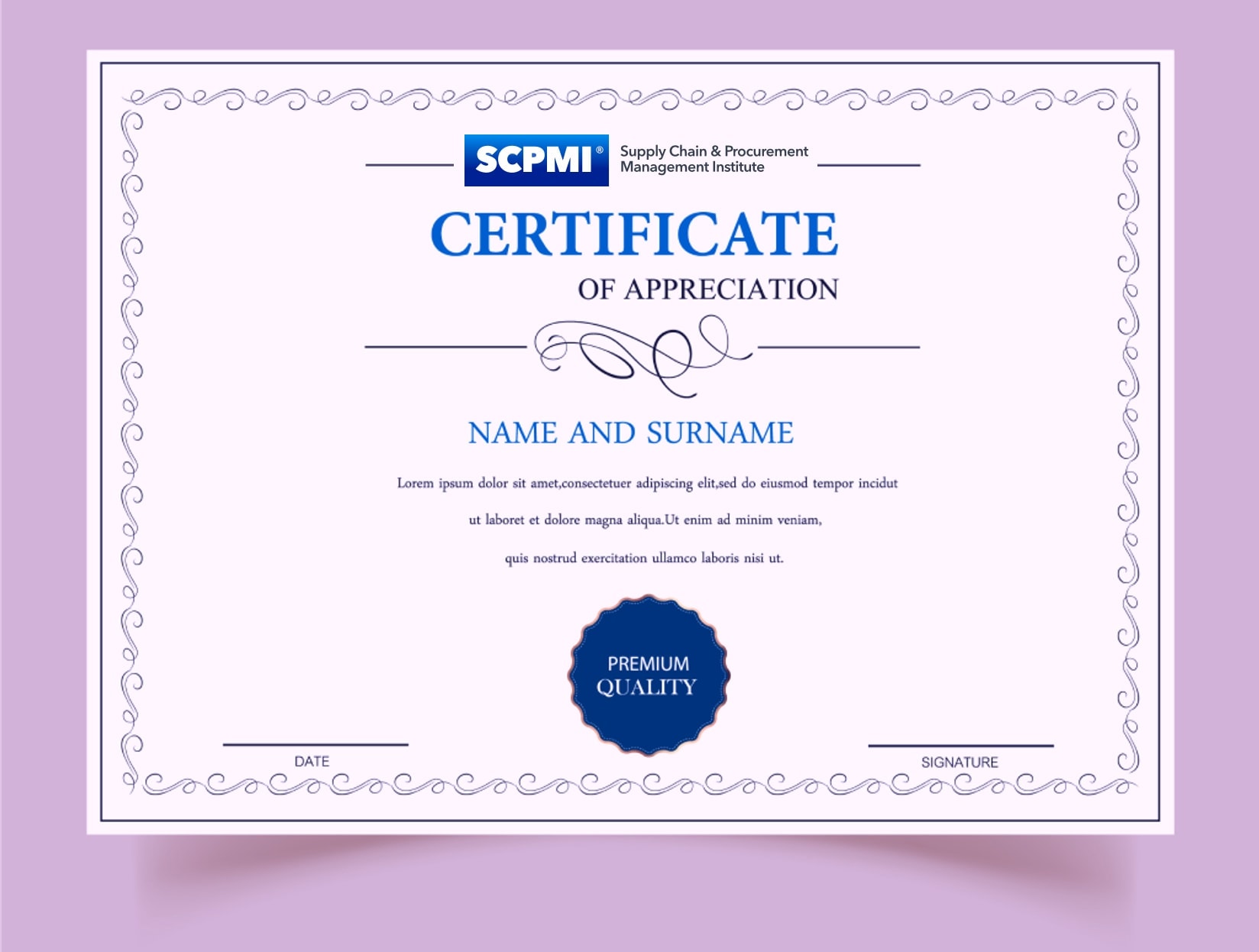
Digital Certificate
Verifiable Credential
Professional recognition
Credential holder profile
Recommended Certifications
CPEDP
4.6 (1,392)
Procurement
Certified Professional in Education Procurement
20 modules60 hours
$1,295
Enrol Now
CPEDS
4.6 (1,392)
Supply Chain
Certified Professional in Education Supply Chain
20 modules60 hours
$1,295
Enrol NowIEAG
4.6 (1,392)
Procurement & Supply Chain
Certificate in Industry Essentials 5.0 — Agriculture and Agribusiness
20 modules60 hours
Free
Enrol Now
Frequently Asked Questions
Everything You Need to Know About the SCPMI Community
Find quick answers about who can join, what you can access and how to participate.
A professional space where supply chain practitioners, leaders, educators and learners connect, exchange knowledge and grow together.
Membership is open to anyone working in or moving towards procurement and supply chain — sourcing and supplier management, planning and operations, quality and regulatory, and healthcare procurement among them.
Holding an SCPMI certification first is not a requirement. Many members join while they are still studying and stay on afterwards.
Discussion spaces organised by industry and by topic, alongside shared resources: professional templates, knowledge checks and worked examples of the kind used throughout the certification.
Members exchange ideas, ask questions and solve real-world supply chain challenges with experienced peers rather than working through them alone.
Each Industry Community gathers members who work in the same sector, so the discussion reflects the regulations, supplier markets and risks that sector actually faces. Pharmaceutical procurement sits within Pharmaceutical & Life Sciences.
Where your work spans more than one sector you can follow several, and the wider community stays open to every member.
Start by introducing yourself and following the industry communities closest to your role. From there, taking part is as simple as answering a question, describing how you handled a problem, or posting one of your own.
Members who want a larger part can contribute resources, help newer members find their footing, or join the sessions SCPMI runs through the year.


Build Specialised Capbility in Pharmaceutical Procurement
Connect with professionals, exchange ideas and
continue growing with SCPMI.